


Resolution to Reconnect Your 2026 Pledge to Stay Connected with Your Incarcerated Loved One
Resolution to Reconnect Your 2026 Pledge to Stay Connected with Your Incarcerated Loved One
As we step into 2026, many of us are making resolutions about health, career, or personal growth. But for families with incarcerated loved ones, there's one resolution that can make a profound difference – a commitment to stay connected through the simple yet powerful act of sending photos, letters, and cards regularly.
The Life-Changing Power of Your Mail
When you drop that envelope in the mailbox or upload those photos, you're doing so much more than sharing a moment. You're providing a lifeline – a tangible connection to the outside world that can literally transform someone's mental health and future success.
Research shows that family contact during incarceration is one of the most powerful predictors of positive outcomes, both during incarceration and after release.¹,² Your photos and letters aren't just mail – they're medicine for the soul, tools for rehabilitation, and bridges to a better future.
The Visitation Gap: Why Your Contact Matters More Than Ever
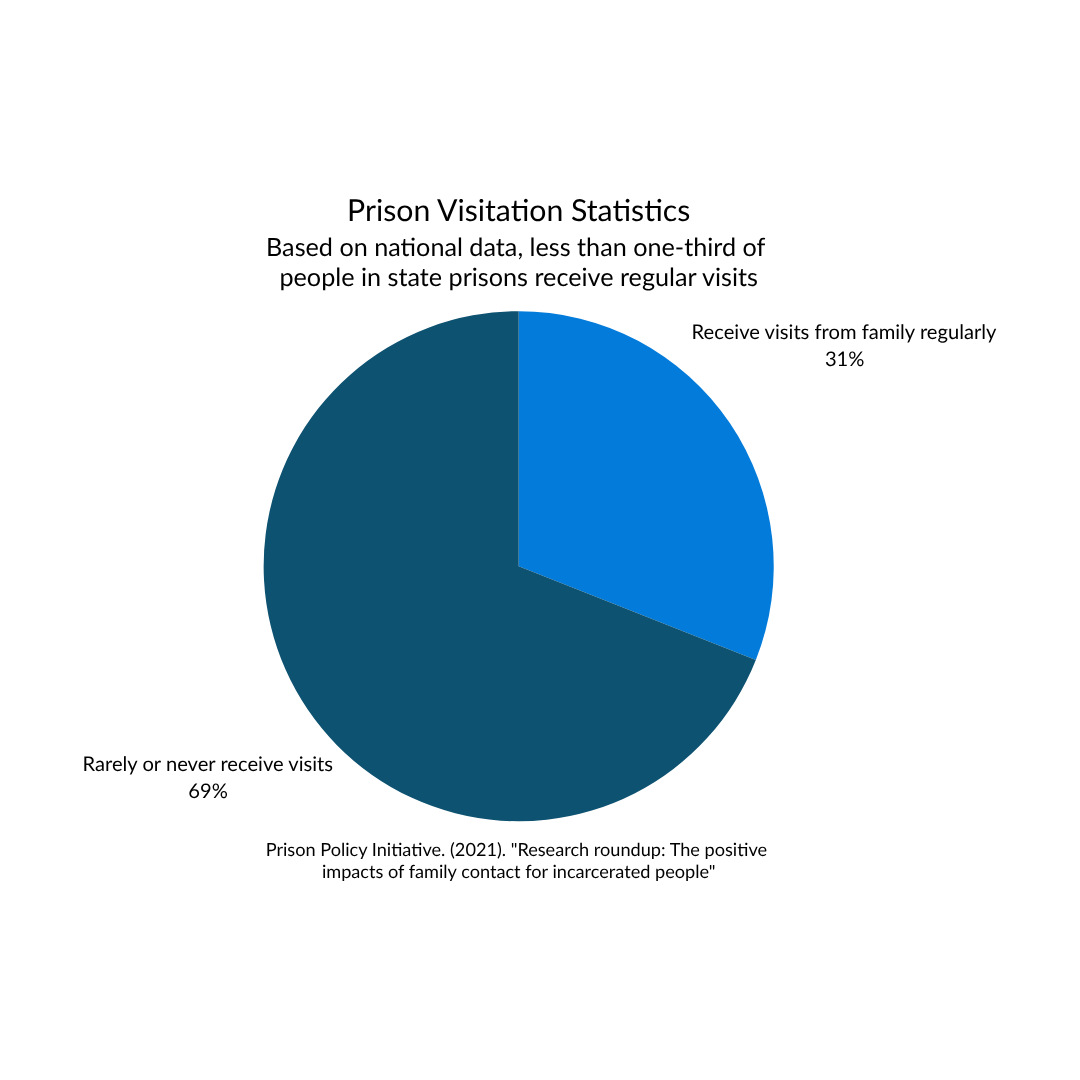
Prison Visitation Statistics Based on national data, less than one-third of people in state prisons receive regular visits: ²,²⁷
- 31% - Receive visits from family regularly
- 69% - Rarely or never receive visits
Note: Two-thirds of parents in prison with minor children have never received a visit from them.³¹
The Numbers Tell the Story
Studies have found that incarcerated individuals who maintain regular contact with family members show: ²,²⁷,³⁰
- 31% reduction in the odds of recidivism within two years of release³⁰
- 13% decrease in felony reconviction rates²
- 25% reduction in technical parole violations²
- 14% decrease in prison misconduct per additional monthly visit²
What Your Photos and Letters Really Do
Mental Health Benefits
- Combat isolation: Your mail reminds them they haven't been forgotten and that someone on the outside cares deeply about them.
- Reduce depression: Regular contact with family during incarceration predicts better mental health outcomes during the first year after release.¹,⁶
- Provide hope: Photos of family milestones, everyday moments, and changing seasons give them something to look forward to and dream about.¹,⁸
- Maintain identity: Your letters help them stay connected to who they are beyond their incarceration – as a parent, sibling, partner, or friend.⁴,¹¹
Behavioral Impact
- Better conduct: Studies show that inmates who receive regular mail have fewer disciplinary infractions, with each additional monthly visit reducing misconduct by 14%.²
- Program participation: Those with strong family connections are more likely to engage in educational and rehabilitation programs.⁷,⁸
- Peaceful environment: Facilities report that when mail comes in regularly, there's less tension and fewer conflicts.¹
"During my time in prison, receiving physical letters from loved ones and friends was a lifeline. Holding a letter in my hands and knowing that it had been written, touched, and sent with care by someone who believed in me gave me a sense of connection that nothing else in that environment could provide." ⁹
The Proven Benefits of Family Contact
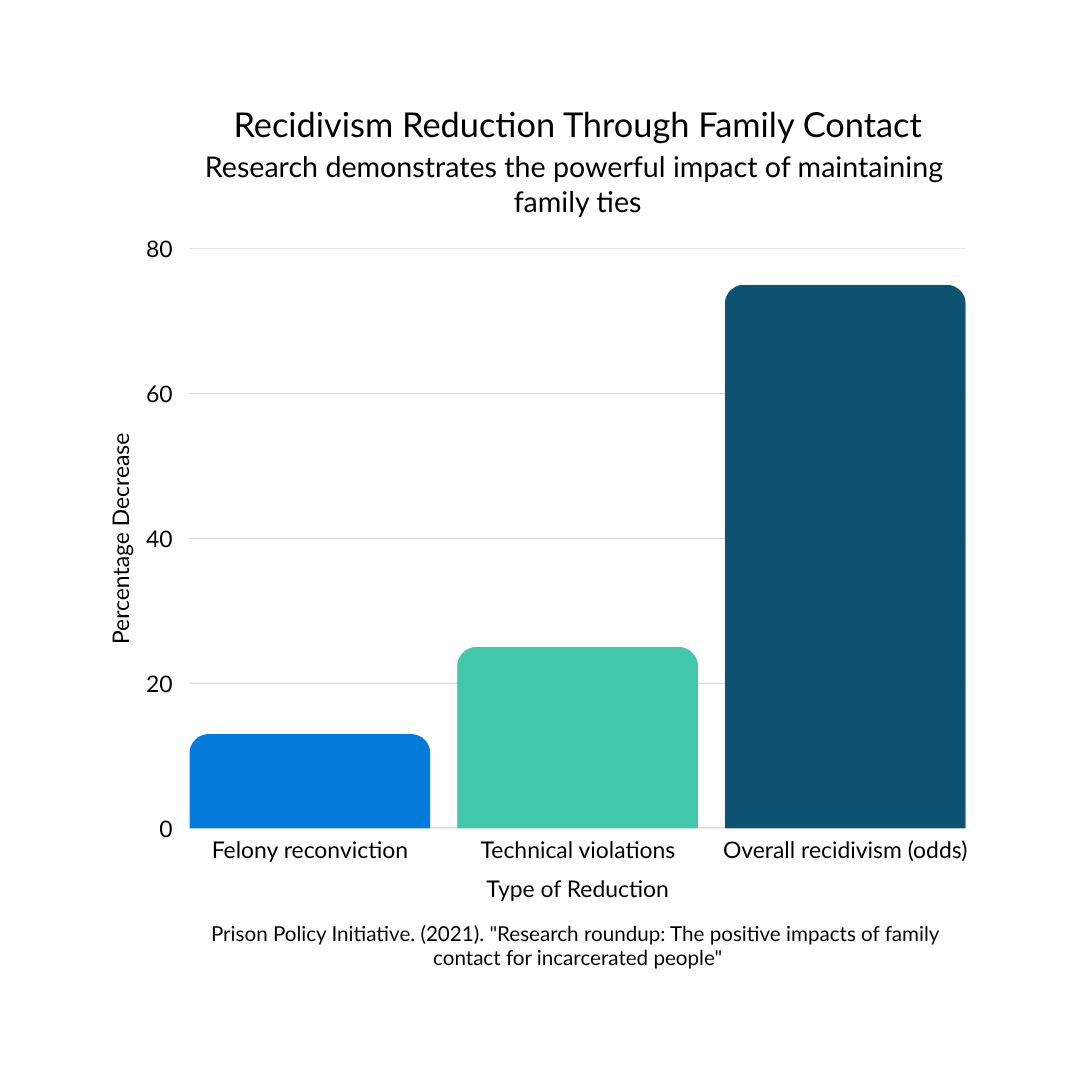
Recidivism Reduction Through Family Contact Research demonstrates the powerful impact of maintaining family ties.²,³⁰
Making Your Resolution Stick: Practical Tips
Start Small, Stay Consistent
You don't need to write novels or send professional photography. The key is consistency.² Here's how to make it manageable:
- Set a reminder on your phone for the 1st and 15th of each month
- Keep a photo folder on your phone specifically for sharing
- Write short updates – even a paragraph matters
- Include kids' drawings or school achievements
- Share the everyday moments – your morning coffee, a sunset, the dog sleeping
- Send holiday cards for every occasion, not just major holidays
What to Share
Remember, what might seem mundane to you is a window to the world for your loved one:⁹,¹⁰
- Family photos from gatherings (even small ones)
- Seasonal changes in your neighborhood
- Updates about mutual friends and family members
- News about your daily life and work
- Encouraging quotes or jokes
- Plans and dreams for when they come home
How Incarcerated Parents Stay Connected
According to national survey data, incarcerated parents maintain contact with their children primarily through:³¹,³³
- Phone calls: 64% call at least monthly (45% call weekly)
- Mail sent: 73% send mail at least monthly
- Mail received: 56% receive mail at least monthly
- In-person visits: Only 37% receive visits at least monthly
This data shows that for most families, phone calls and letters are the primary means of staying connected – making your commitment to regular correspondence even more critical.
The Ripple Effect of Your Connection
When you maintain regular contact with your incarcerated loved one, the benefits extend far beyond the prison walls:⁸,¹¹
Family Benefits
Families who maintain regular contact report:¹,⁴,⁸,¹¹
- Stronger relationships that survive incarceration
- Better mental health for children with incarcerated parents
- Higher likelihood of successful family reunification
- Reduced trauma and stress for all family members
- Improved family connectedness that persists after release
Breaking Down Barriers
We understand that staying connected isn't always easy. Distance, cost, and complex mail rules can make it challenging.⁹,¹⁰ Research shows that almost two-thirds of people in state prisons are located more than 100 miles from home, with more than 10% over 500 miles away.²⁷,³¹ Distance is a strong predictor of receiving visits – which is why alternatives like mail and photos become even more important.
That's why services like Pelipost exist – to make sending photos as easy as posting on social media, ensuring your loved one never misses a moment of your life.
Common Challenges and Solutions
- Time constraints: Use apps that let you upload photos quickly
- Cost concerns: Even one photo a month makes a difference
- Distance barriers: Photos and letters overcome the distance problem that prevents visits²⁷,³¹
- Not knowing what to say: Pictures speak louder than words
- Facility restrictions: Digital services handle compliance for you
Your Resolution Matters More Than You Know
As we begin 2026, remember that your resolution to stay connected isn't just about maintaining a relationship – it's about mental health, rehabilitation, and hope.³,⁵,⁶ It's about reducing recidivism by up to 31% and building stronger families. It's about recognizing that people are more than their worst mistakes and that love and connection can transform lives.
Every photo you send says "I believe in you." Every letter whispers "You matter." Every card reminds them"You have a future." This year, make the resolution that changes everything – commit to staying connected.
References
- Folk, J. B., Stuewig, J., Mashek, D., Tangney, J. P., & Grossmann, J. (2019). "Behind Bars but Connected to Family: Evidence for the Benefits of Family Contact During Incarceration." Journal of Family Psychology, 33(4), 453-464. National Center for Biotechnology Information. Available at: pmc.ncbi.nlm.nih.gov/articles/PMC6625803/
- Prison Policy Initiative. (2021). "Research roundup: The positive impacts of family contact for incarcerated people and their families." Available at: prisonpolicy.org/blog/2021/12/21/family_contact/
- U.S. Department of Health and Human Services. (2025). "Incarceration and Health." Healthy People 2030, Office of Disease Prevention and Health Promotion. Available at: odphp.health.gov/healthypeople/priority-areas/social-determinants-health/literature-summaries/incarceration
- Glaze, L. E., & Maruschak, L. M. (2008). "Parents in Prison and Their Minor Children." Bureau of Justice Statistics Special Report, U.S. Department of Justice.
- National Alliance on Mental Illness. (2023). "Mental Health Treatment While Incarcerated." NAMI Policy Priorities. Available at: nami.org/advocacy/policy-priorities/improving-health/mental-health-treatment-while-incarcerated/
- Quandt, K. R., & Jones, A. (2021). "Research Roundup: Incarceration can cause lasting damage to mental health." Prison Policy Initiative. Available at: prisonpolicy.org/blog/2021/05/13/mentalhealthimpacts/
- U.S. Department of Justice. (2025). "Prison Reform: Reducing Recidivism by Strengthening the Federal Bureau of Prisons." DOJ Archives. Available at: justice.gov/archives/prison-reform
- Herman-Stahl, M., Kan, M. L., & McKay, T. (2008). "Incarceration and the Family: A Review of Research and Promising Approaches for Serving Fathers and Families." U.S. Department of Health and Human Services, Assistant Secretary for Planning and Evaluation.
- Ludin, M. (2024). "The Importance of Physical Mail for Incarcerated People in Wisconsin." ACLU of Wisconsin. Available at: aclu-wi.org/news/importance-physical-mail-incarcerated-people-wisconsin/
- Restore Justice Foundation. (2024). "Mail Scanning: The Hidden Cost of Digital Communication in Prisons." Available at: restorejustice.org/mail-scanning/
- National Institute of Justice. (2025). "Hidden Consequences: The Impact of Incarceration on Dependent Children." NIJ Journal, U.S. Department of Justice.
- Government Accountability Office. (2018). "Recidivism Among Prison Inmates with Serious Mental Illness." GAO Report to Congressional Requesters.
- Prison Policy Initiative. (2015). "Separation by Bars and Miles: Visitation in state prisons." Available at: prisonpolicy.org/reports/prisonvisits.html
- Mitchell, M. M., Spooner, K., Jia, D., & Zhang, Y. (2016). "The effect of prison visitation on reentry success: A meta-analysis." Journal of Criminal Justice, 47, 74-83.
- Sawyer, W. (2022). "Both sides of the bars: How mass incarceration punishes families." Prison Policy Initiative. Available at: prisonpolicy.org/blog/2022/08/11/parental_incarceration/
- Herman-Stahl, M., Kan, M. L., & McKay, T. (2008). "Incarceration and the Family: A Review of Research and Promising Approaches for Serving Fathers and Families." U.S. Department of Health and Human Services, ASPE. Available at: aspe.hhs.gov/reports/incarceration-family-review-research-promising-approaches-serving-fathers-families-1


.png)
